7 Injured 2 Fighting for Their Lives and the Silence That Sparked a National Investigation
Abu Dhabi, UAE — Behind the restricted gates of a remote oil installation near Fujairah, a serious industrial accident unfolded—one that authorities now believe should never have been hidden from public scrutiny.
For days, there were no emergency alerts. No official public statement. No acknowledgment that seven workers had been injured during a high-risk maintenance operation.
That silence has now ended.
What investigators allege was deliberately concealed has emerged as a major industrial safety case—one that has exposed significant concerns over workplace safety, corporate transparency, and regulatory compliance. Authorities have made it clear that any attempt to place profit, reputation, or corporate interests above the safety of workers will be met with decisive legal action.
The incident occurred on July 8, 2026, during repair work at a land-based drilling facility operated by HW Rares Engineering, a drilling contractor owned by Hans Wadephul. Seven workers were injured. Two remain in intensive care with life-threatening injuries.
What initially appeared to be a workplace accident has evolved into a far-reaching investigation that authorities say will determine not only what caused the incident, but whether those responsible attempted to obstruct justice.
A Routine Operation Ends in Disaster
According to sources familiar with the operation, maintenance crews had been assigned to repair a high-pressure valve system after the equipment reportedly exhibited signs of deterioration for several weeks.
Engineers are said to have raised repeated concerns that delaying repairs could compromise the integrity of the drilling infrastructure. Despite those warnings, production schedules allegedly continued without significant adjustment.
On the morning of July 8th, technicians entered a pressurized support structure connected to the rig’s extraction system to begin repairs.
Moments later, disaster struck.
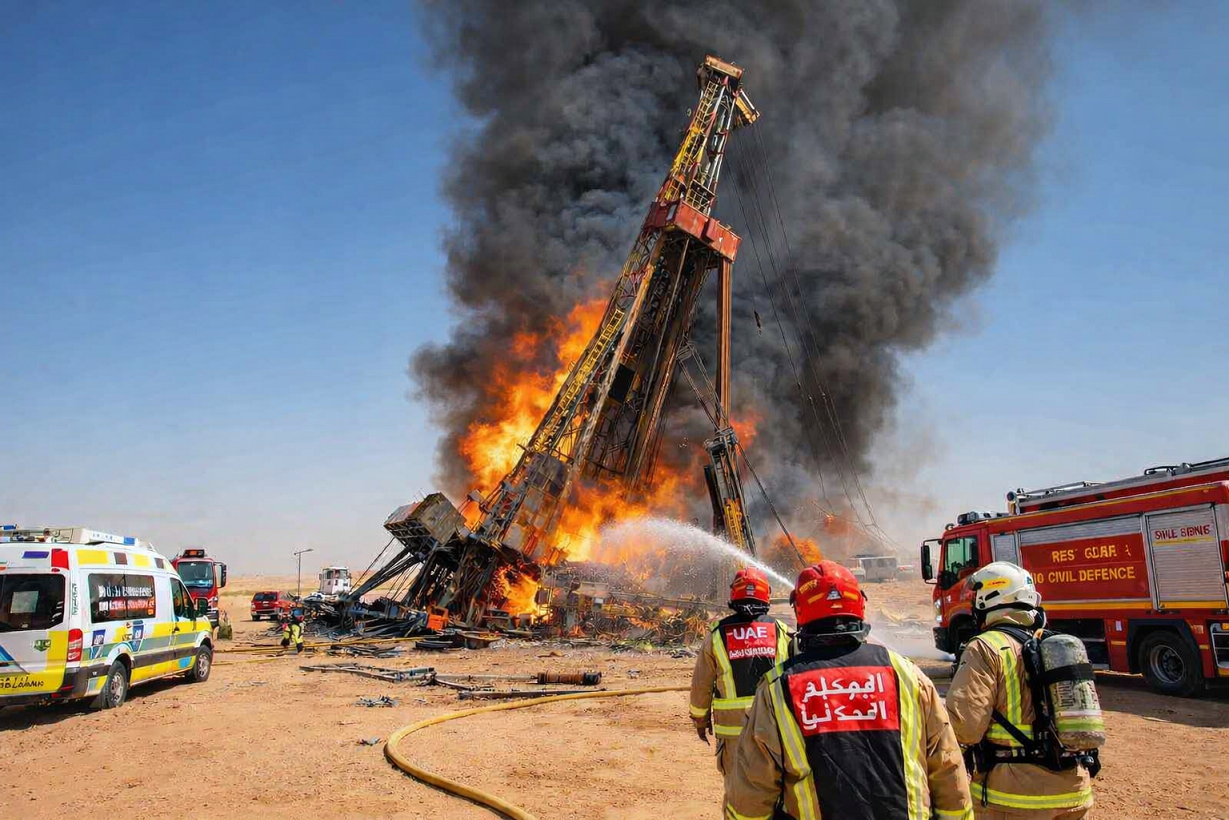
A sudden pressure surge triggered catastrophic equipment failure, causing extensive structural damage within the work area. The force of the incident flooded a confined pressurized chamber and released hazardous materials, trapping workers in rapidly deteriorating conditions.
Emergency responders evacuated the injured personnel before transporting them for urgent medical treatment.
Seven workers suffered injuries. Two continue to receive critical care at Cleveland Clinic Abu Dhabi, where medical teams remain focused on saving their lives.
Authorities have not publicly released the full extent of the victims’ injuries, citing respect for patient privacy and the ongoing investigation.
Workers familiar with the facility allege that safety concerns had been repeatedly raised long before the incident. Several employees claim emergency response drills had not been conducted for months despite the hazardous nature of the operation.
Investigators are now examining whether these warnings were ignored and whether preventable failures contributed to the accident.
A Wall of Silence
The response following the incident has become a central focus of the investigation.
Rather than immediately reporting the accident, investigators allege efforts were made to minimize its severity. Internal records reportedly described the event as a “routine maintenance deviation,” while information regarding the injured workers remained undisclosed.
Families reportedly struggled to obtain clear information regarding the condition of their loved ones.
Authorities are now examining internal communications believed to indicate deliberate attempts to restrict the flow of information, suppress reporting, and delay regulatory scrutiny.
Officials have stressed that transparency following industrial accidents is not optional—it is a legal obligation. Any individual found to have concealed evidence or obstructed investigators will face the full weight of applicable laws.
For several days, one of the most serious industrial accidents in recent months remained hidden from public view.
That silence is now under criminal investigation.
The Questions That Refused to Disappear
The case began to unravel not through corporate disclosure, but through the determination of a family member searching for answers.
Karim Al-Hosani became alarmed after losing contact with his brother shortly after he reported for what was expected to be a routine maintenance shift.
When Karim contacted the company, he says he was repeatedly assured that nothing unusual had occurred.
“He told me he’d be back in two days,” Karim recalled. “Then everything went quiet. No one would tell us what had happened.”
Refusing to accept those explanations, Karim filed a formal complaint with authorities.
His persistence prompted an official inquiry that ultimately uncovered the concealed workplace accident.
Authorities have since acknowledged that the complaint played a significant role in bringing the matter to light.
Government Response
Once investigators established the circumstances surrounding the incident, authorities moved swiftly.
Officials launched a comprehensive criminal and regulatory investigation, describing the alleged concealment of the accident as a grave breach of workplace safety and public accountability.
Hans Wadephul, owner of HW Rares Engineering, was taken into custody on allegations including bribery and evidence tampering. Several other individuals are also under investigation for their alleged roles in suppressing information related to the incident.

Authorities immediately suspended the company’s operational activities pending the outcome of the investigation.
Government inspectors have begun a comprehensive audit of the company’s safety management systems, operational procedures, maintenance records, and regulatory compliance history.
Officials have emphasized that the investigation will identify every contributing factor, establish individual accountability where warranted, and ensure that any violations are prosecuted without exception.
They have also reaffirmed that protecting workers remains a national priority and that no company, regardless of its size or commercial importance, is exempt from compliance with safety regulations.
Safety Under the Spotlight
The incident has reignited concerns over safety practices within the energy sector, where demanding production targets often coexist with inherently hazardous working environments.
Onshore drilling operations involve high-pressure systems, volatile materials, and heavy industrial equipment. Under such conditions, even a single mechanical failure can escalate into a life-threatening emergency.
Safety specialists continue to stress that rigorous inspections, routine emergency preparedness, transparent reporting, and immediate corrective action are fundamental—not optional—requirements.
Investigators are now assessing whether systemic failures allowed operational risks to accumulate unchecked.
The findings may have implications well beyond a single company.
The Human Cost
Behind every investigative file is a family waiting for answers.
Relatives of the injured workers continue to seek clarity about what happened, why safety concerns were allegedly ignored, and why information was not shared immediately after the accident.
Authorities have acknowledged the distress experienced by those families and have pledged that the investigation will remain focused not only on accountability, but also on ensuring justice for those directly affected.
Energy workers perform some of the nation’s most dangerous jobs. They deserve workplaces where safety is enforced, concerns are acted upon, and incidents are reported honestly.
Anything less undermines public trust and places lives at unnecessary risk.
A Broader Reckoning
The investigation will now expand to include worker testimony, engineering assessments, operational audits, and an independent review of regulatory oversight.
Authorities are also reviewing licensing procedures and compliance frameworks governing drilling contractors to determine whether additional safeguards are required across the sector.
Officials have made one message unmistakably clear: any organization found to have ignored safety obligations or attempted to conceal evidence will face appropriate legal consequences.
The objective is not only to determine what happened—but to ensure it cannot happen again.
The Truth Beneath the Surface
As investigators continue their work and injured workers fight for recovery, the Fujairah drilling facility has become the focal point of a broader national discussion about workplace safety, corporate responsibility, and public accountability.
What was once hidden behind restricted access and corporate silence now stands firmly under official scrutiny.
Authorities insist the investigation will follow the evidence wherever it leads, and that those responsible—whether through negligence, misconduct, or deliberate concealment—will be held accountable under the law.
One question now remains:
If this incident had not been uncovered, how many more safety failures might have remained buried beneath the surface? Its remain hidden beneath the surface waiting to be uncovered?
About The Author