
What Dubai’s smart medical visa really tells us about where healthcare is headed
Choosing where to receive treatment is one of the most consequential decisions a family makes. They weigh safety, quality and specialist expertise — and, yes, convenience, because convenience is a signal.Unsplash
As a clinician, I have spent most of my career on the treatment side of medicine. But anyone who has cared for international patients knows a quiet truth: for someone travelling across borders for care, the hardest part of the journey often has nothing to do with the operation itself. It is everything that comes before it — the visas, the approvals, the paperwork, the uncertainty.
When delays affect outcomes
The problem it actually solves is fragmentation, and it is one I feel strongly about. Fragmentation is the quiet disease of modern healthcare: we have built systems that are individually excellent and collectively disconnected, leaving the patient to stitch them together alone. Connecting those systems may look like a technical fix. It is not. It is a shift in philosophy — from systems built around institutions to systems built around the patient.
This matters clinically, not just operationally. Faster visa processing means patients begin consultations, diagnostics and treatment sooner — and in medicine, sooner often matters a great deal. The days lost to administrative delay are not neutral; for many conditions, time is the one variable we cannot buy back. Removing that delay is not a convenience. It is, sometimes, a clinical outcome.
It also builds confidence. Choosing where to receive treatment is one of the most consequential decisions a family makes. They weigh safety, quality and specialist expertise — and, yes, convenience, because convenience is a signal. When a destination removes friction from the journey, it tells the patient that their time and their wellbeing come first, and that earns trust before a single consultation begins.
SPONSORED LINKS BY PROJECT AGORA uploads medical records, books appointments, receives a treatment plan and tracks their journey from one dashboard — with virtual consultations letting doctor and patient meet before anyone boards a flight. That is not a futuristic fantasy; it is the natural destination of what Dubai has just begun. And when systems speak to one another, our teams spend less time on paperwork and more on the only thing that truly matters in a hospital: the patient in front of them.
The future we should build
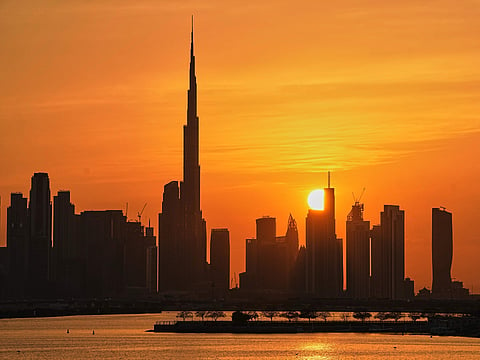
Dubai already draws patients from across the GCC, Africa, South Asia, Central Asia and parts of Eastern Europe for specialised care in orthopaedics, oncology, cardiology, fertility, women’s health and advanced diagnostics. This initiative strengthens the ecosystem that serves them — and underlines a principle I believe in deeply. We too often confine “innovation” to scanners, robots and algorithms, but some of the most powerful innovation is invisible: redesigning the systems around the patient so care is easier to reach. A breakthrough no one can access is not yet a breakthrough.
As countries compete for international patients, the winners will not be decided by clinical excellence alone — that is now the price of entry, not the differentiator. They will be decided by the quality of the whole experience, from the first click to the final follow-up. By weaving healthcare and government into one connected, patient-first journey, Dubai is not merely keeping pace with the future of health tourism. It is helping to write it.
About The Author